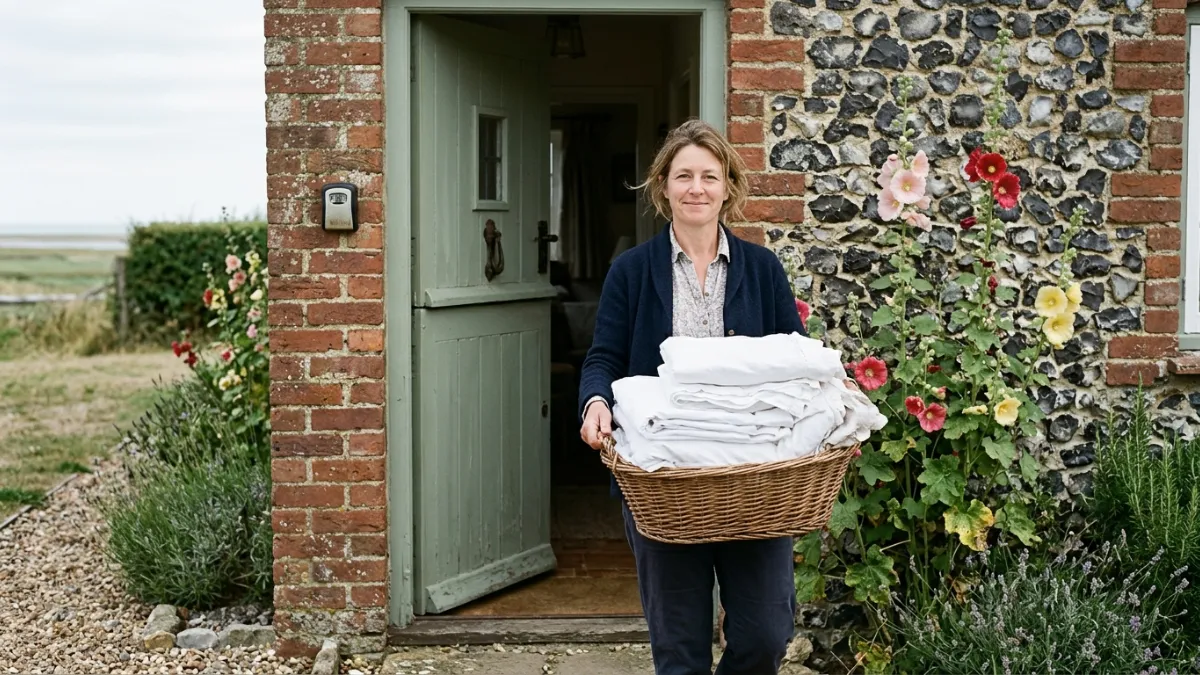
Since 6 April 2025 (1 April 2025 for companies) there is no special tax regime for furnished holiday lets. Your cottage, flat or lodge is taxed like any other rental property, and most furnished holiday let allowable expenses are unchanged: cleaning and changeovers, laundry, booking commission, energy, insurance, repairs, council tax or business rates and your accountant. What you have lost is the full deduction for mortgage interest (now a 20% tax credit), capital allowances on new furniture, the capital gains reliefs on selling or gifting, and pension relief based on the profits.
The 2025–26 return, due by 31 January 2027, is the first where a former holiday let goes into the ordinary UK property pages. Here is what you can claim and in which box, what the change costs with real numbers, and the rates, council tax and VAT rules that many owners assume went at the same time. They didn’t.
What changed when the furnished holiday let regime was abolished
A furnished holiday let (FHL) was a property let commercially for short stays that passed HMRC’s occupancy tests: available for at least 210 days and actually let for at least 105 days in the tax year. Passing them gave it business-style tax treatment. Since April 2025 those tests no longer matter for income tax or capital gains tax.
Income from a former FHL is now part of your normal UK property business, or your overseas property business if the let is in the EEA. This is what owners actually feel in the tax bill.
| Item | FHL regime (to 5 April 2025) | From 6 April 2025 |
|---|---|---|
| Mortgage and loan interest | Fully deducted from profit | 20% tax credit (22% from 2027–28) |
| Furniture, appliances, fixtures | Capital allowances, including the Annual Investment Allowance | Replacement relief only; existing pools run off |
| CGT on sale or gift | Business Asset Disposal Relief, rollover and gift relief | 18% or 24%, no business reliefs |
| Pension contributions | Profits were relevant UK earnings | Profits no longer count |
| Losses | Ring-fenced to the FHL business | Merged with your other UK lets |
| Spouses and civil partners | Profit split as the couple agreed | 50:50 unless Form 17 is filed |
| Business rates, council tax, VAT | Separate rules | Unchanged |
Holiday letting income has always been property income, not trading income, and that test hasn’t moved. The exception is a guest house or B&B in the home you live in, where you provide meals and services well beyond a landlord’s. That is a trade, goes on the self-employment pages and keeps full interest relief. Calling a self-catering cottage “serviced accommodation” and leaving a hamper on the table doesn’t make it one.
Furnished holiday let allowable expenses you can still claim
The test is the same as for any landlord: the cost must be wholly and exclusively for the letting, and revenue rather than capital. For a holiday let that covers far more than for a long let, because you pay for the energy, the Wi-Fi, the linen and the cleaner between bookings.
| Expense | Allowable? | SA105 box | Watch out for |
|---|---|---|---|
| Booking platform and agency commission | Yes | 27 | Declare gross bookings, then deduct the fee |
| Changeover cleaning, laundry, gardening | Yes | 28 | Your own time isn’t deductible |
| Energy, water, broadband, TV licence | Yes | 24 / 28 | Apportion for your own stays |
| Council tax or business rates, insurance | Yes | 24 | Apportion for your own stays |
| Repairs and maintenance (like for like) | Yes | 25 | Improvements are capital |
| Replacement furniture and appliances | Yes, replacement relief | 36 | Not a first furnishing |
| Safety checks, fire risk assessment, accountant | Yes | 27 | Planning fees are capital |
| Guest supplies, advertising, travel to the property | Yes | 29 | Not trips that double as a holiday |
| Mortgage interest and arrangement fees | Tax credit only | 44 | Not deducted from profit |
Below £90,000 of total property income you can put one expenses total in box 29, leaving finance costs for box 44. Keep the itemised figures anyway: HMRC asks for them in an enquiry.
Cleaning and changeovers
For most lets this is the biggest cost after commission. If you pay a self-employed cleaner by the hour, checking what self-employed cleaners charge per hour helps you budget changeovers realistically. A cleaning fee charged to guests is income; the cleaner’s invoice is the expense. If you do changeovers yourself, you can claim materials and travel, not your time.
When you stay there yourself
This is where we see the most mistakes. Weeks when the cottage sits empty but available to book are business time. Weeks used by you, your family or friends on mate’s rates are not. HMRC’s own example: insure the property for the full year but use it yourself for four months, and the four months’ share goes in box 30 as a private use adjustment. The same applies to broadband, council tax and the interest in box 44. Keep the booking calendar as evidence.
Capital costs were never deductible and still aren’t: the purchase, an extension, a new kitchen where there wasn’t one, or the capital part of mortgage repayments. Improvements still reflected in the property when you sell reduce your capital gain instead, so keep those invoices for as long as you own it.
Mortgage interest: from full deduction to a 20% tax credit
This is where most owners lose money. Interest on a mortgage, loan or overdraft used for the property, plus arrangement fees, no longer reduces your profit. You get a tax reduction of 20% of the lowest of your finance costs, your property profits and your income above the personal allowance. Anything unused carries forward (box 45). Companies are unaffected; the restriction has never applied to them.
For a basic-rate taxpayer the change can cost almost nothing: tax at 20%, credit at 20%. It bites when adding the interest back pushes taxable income over a threshold: £50,270, where 40% starts; £60,000, where the High Income Child Benefit Charge begins; £100,000, where the personal allowance tapers away. A retired couple with modest pensions may barely notice. A higher-rate earner with a big mortgage on the cottage will.
A second step is coming. Finance Act 2026 creates separate property income rates from 6 April 2027: 22%, 42% and 47% for owners in England and Northern Ireland, with the finance cost credit rising to 22%. The same Act lets the Scottish Parliament and the Senedd set their own property rates from 2027–28, so if your cottage income is taxed in Scotland or Wales, wait for those budgets before redoing the sums. For higher-rate owners in England the squeeze tightens slightly.
Furniture, capital allowances and replacement relief
Capital allowances on furniture, appliances and fixtures ended in April 2025, with one transitional rule. If you had a pool at 5 April 2025, you keep claiming writing-down allowances on the balance until it is used up. A main pool of £7,400 gives 18%, or £1,332, for 2025–26 (box 35), leaving £6,068; in 2026–27 the allowance is £1,092. Once the balance is £1,000 or less you can write it off in one go. Nothing new goes into the pool.
New spending goes through replacement of domestic items relief (box 36): movable furniture, furnishings such as curtains, carpets and linen, appliances and kitchenware, when they replace an item guests can no longer use. You deduct the cost of the new item plus delivery or disposal, less anything you got for the old one. Upgrades are capped at the like-for-like cost: swap a £400 sofa for a £550 sofa bed and you claim £400. A more energy-efficient fridge is a modern equivalent, so its full cost counts.
The painful case is a new purchase. Spend £12,000 furnishing a second cottage and there is no income tax relief for that first furnishing; relief only arrives when you replace those items years later. Fixtures in a dwelling don’t qualify for allowances either. If you sell a former FHL with fixtures in a pool, ask your accountant about a section 198 election, because the value given to the fixtures goes back into the pool and can create a balancing charge.
Worked example: a Norfolk cottage, before and after
Illustrative case: Claire earns a £62,000 salary, so all her property profit is taxed at the higher rate. Her two-bedroom cottage near the North Norfolk coast took £34,000 in bookings in 2025–26, including cleaning fees paid by guests. Small business rate relief brings her business rates to nil. Her mortgage interest was £8,400.
| Line | Old FHL rules | 2025–26 | 2027–28 rates, same figures |
|---|---|---|---|
| Bookings income | £34,000 | £34,000 | £34,000 |
| Commission, cleaning and laundry | −£9,800 | −£9,800 | −£9,800 |
| Energy, water, broadband, TV licence | −£3,100 | −£3,100 | −£3,100 |
| Insurance, repairs, supplies, accountant | −£4,050 | −£4,050 | −£4,050 |
| Replacement sofa and two mattresses | −£1,250 | −£1,250 | −£1,250 |
| Mortgage interest | −£8,400 | Not deducted | Not deducted |
| Taxable profit | £7,400 | £15,800 | £15,800 |
| Tax at 40% / 42% | £2,960 | £6,320 | £6,636 |
| Finance cost credit | None | −£1,680 | −£1,848 |
| Tax on the cottage | £2,960 | £4,640 | £4,788 |
The abolition costs Claire £1,680 a year: the 20-point gap between her 40% rate and the 20% credit on £8,400 of interest. The 2027 rates add £148. Without a mortgage her tax would be the same under both regimes, because every other cost is still deductible.
Two knock-on effects catch people out. With less than 80% of her tax now collected through PAYE, payments on account start: if she had none before, the January 2027 bill is the £4,640 plus a first £2,320 instalment for 2026–27. Pay late and HMRC adds late payment interest from the day after the deadline. And her Making Tax Digital qualifying income is the £34,000 gross, not the profit: under the £50,000 threshold for 2026–27, over the £30,000 one from April 2027. Our guide to Making Tax Digital thresholds and dates explains how that is measured.
Selling or gifting: furnished holiday let tax on gains
For capital gains tax a former FHL is now an ordinary second home. Disposals from 6 April 2025 can’t use Business Asset Disposal Relief, rollover relief (selling one let and reinvesting in another), gift relief or relief for loans to traders. Gains are taxed at 18% within your unused basic rate band and 24% above it, after the £3,000 annual exempt amount. When there is tax to pay, the disposal must be reported and the tax paid within 60 days of completion, and a gift to family counts as a disposal for this rule too.
Illustrative case: a cottage bought in 2013 for £215,000 (£6,000 buying costs) and extended in 2019 for £28,000 sells in 2026–27 for £410,000, with £7,500 selling costs. The gain is £153,500, or £150,500 after the exempt amount. A higher-rate seller pays £36,120. Before April 2025, with Business Asset Disposal Relief at 10%, it would have been £15,050.
One narrow window remains. If your FHL business genuinely ceased before 6 April 2025 (no bookings and no intention to resume, not a quiet season) and met the qualifying conditions, the relief can still apply to a disposal within three years of cessation. At the 18% rate that applies from 6 April 2026, it would save a higher-rate seller £9,030 on the example above. A basic-rate seller gains much less.
Giving the cottage to a son or daughter is now a disposal at market value with no gift relief, so CGT is due although no money changes hands. We’d get that calculated before anyone signs a transfer. Inheritance tax was never part of the FHL package; holiday lets have always struggled to qualify for business property relief.
Losses, joint owners and pensions
Old FHL losses aren’t lost. They become losses of your ongoing UK (or overseas) property business and go against future property profits in box 39. If you also have a long let, a loss brought forward from the cottage can now reduce the profit on that flat, which the old ring-fence prevented. You still can’t set a property loss against your salary, apart from the part that comes from capital allowances.
Married couples and civil partners used to split FHL profits however they agreed. Now the default is 50:50. If you own the property in unequal shares and want the income taxed that way, you both sign a declaration and send Form 17 within 60 days. It works from the date of the declaration, not backwards, and must match real beneficial ownership.
Pensions are the change people notice last. FHL profits used to count as relevant UK earnings. From 2025–26 they don’t, so if the cottage is your only source of earnings, tax relief on personal pension contributions is limited to £3,600 gross a year.
Keep a simple monthly record: gross booking value, the commission the platform kept, the payout, and that month’s cleaning, laundry and repair receipts. Booking platforms now report hosts’ income to HMRC, so your gross figure has to match theirs, not the smaller amount that reached your bank.
What did not change: business rates, council tax and VAT
Many owners still quote 210 and 105 days. Those figures are dead for income tax. The tests that still matter are local, and they differ across the UK.
| Nation | Business rates if | Otherwise |
|---|---|---|
| England | Available 140 nights in the last 12 months and the next 12, let 70 nights, stays of 28 nights or fewer | Council tax; many councils add a second-home premium of up to 100% since April 2025 |
| Wales | Available 252 nights, let 182, stays of 28 nights or fewer; for periods ending on or after 1 April 2026 lettings can be averaged over 24 or 36 months, and up to 14 nights donated to a registered charity count | Council tax, premiums of up to 300% |
| Scotland | Available 140 nights and let 70 in the financial year, proved to the assessor; short-term let licence required | Council tax |
Staying on business rates is usually worth the effort. In England, if you let a single property with a rateable value under £15,000 you may get small business rate relief, as Claire does. Drop below 70 let nights and you move to council tax, possibly with a premium. In England a planning condition that prevents permanent occupation is one of the exceptions from that premium.
Welsh owners have two more things to plan for. Every business that charges for overnight stays in Wales, self-catering included, must register with the Welsh Revenue Authority by 31 March 2027. Councils that adopt the visitor levy can start charging it only after consultation and 12 months’ notice, at £1.30 plus VAT per person per night for self-catering. You account for it to the WRA, so build it into the price or show it clearly on the booking rather than letting it come out of your margin.
VAT is untouched. Holiday accommodation is standard-rated at 20%, and your bookings count towards the £90,000 VAT registration threshold. Owners with two or three busy cottages reach it sooner than they expect, because the test is gross bookings over any rolling 12 months, not profit.
Ownership, borrowing and any planned sale change these numbers a lot. The examples are illustrative and use the rules as checked in November 2026. Before you sell, gift, move the property into a company or claim relief on a pre-April 2025 cessation, check your position with an accountant or chartered tax adviser.
For the records, Gremio Software’s assistant reads a photo of an expense receipt and fills in the fields, which beats a shoebox of laundry and hardware-shop receipts in January.
Frequently asked questions
Can I still claim mortgage interest on a holiday let?
Not as an expense. Since 6 April 2025 individual owners get a tax reduction of 20% of the interest (22% from 2027–28), entered in box 44. Companies that own holiday lets still deduct interest in full.
Can I claim the cost of furnishing a new holiday let?
No. The first furnishing is capital and gets no income tax relief now that capital allowances have gone. When you later replace those items like for like, replacement of domestic items relief covers the new ones.
Can holiday let losses be set against my salary?
Generally not. Property losses are carried forward against future property profits, which now include any long lets you have. Only the part of a loss created by capital allowances can go against other income, within limits.
Is my holiday let still treated as a business?
For income tax it is part of your property business, taxed like other rentals. For business rates it can still be non-domestic if it passes your nation’s nights tests. A guest house or B&B in your own home with real services is a trade.
Should I move my holiday let into a limited company?
Rarely for a single cottage. The transfer is a disposal at market value for CGT, with no business relief now, and usually triggers Stamp Duty Land Tax at the higher rates (LBTT or LTT in Scotland and Wales). It can suit larger, heavily mortgaged portfolios, after a proper calculation.
Do I have to report the sale of a holiday let within 60 days?
Yes, if you are UK resident and there is capital gains tax to pay. You file a UK property return and pay the estimated tax within 60 days of completion, then report the gain again on your Self Assessment return. If the gain is covered by the £3,000 exempt amount or by losses, no 60-day return is needed. Late returns and late payment bring penalties and interest.
Sources
Rules checked on 1 November 2026. Check your own position with your accountant.
- HM Treasury and HMRC: Abolition of the furnished holiday lettings tax regime
- HMRC: Clarification on abolition of the furnished holiday lettings tax regime
- HMRC: UK property notes, tax year 2025 to 2026 (SA105)
- Finance Act 2026, sections 6 to 8 (property income rates and Scottish and Welsh property rates)
- GOV.UK: Capital Gains Tax rates and allowances
- GOV.UK: Business rates for self-catering and holiday let accommodation
Receipts and figures ready for your accountant
Photograph a receipt and the AI assistant fills in the expense. Your accountant gets read-only access to your income and expenses and can export them to Excel or CSV. €19.95/month · or €199.50/year with 2 months free · no tie-in.