How to Write a Quote: Quote vs Estimate vs Invoice

How to write a quote for any trade, the difference between a quote, an estimate and an invoice, when a quote becomes binding, and how deposits and final invoices work for VAT.
How to write a quote for any trade, the difference between a quote, an estimate and an invoice, when a quote becomes binding, and how deposits and final invoices work for VAT.

Sole trader Self Assessment in 2026/27: who must register, the 5 October and 31 January deadlines, payments on account with a worked example, basis periods, SA103S or SA103F, Class 4 NI and penalties.

When the construction reverse charge applies, how end-user notices and the 5% disregard work, which VAT return boxes each side fills in and what it does to a subcontractor’s cash flow.

HMRC’s flat rate for sole traders and partners in 2026-27: 55p a mile for the first 10,000 business miles, 25p after. Flat rate vs actual costs, commuting rules, MTD, VAT and a mileage log template.

A copy-and-paste CIS invoice template for UK subcontractors: what to include, how to show the CIS deduction and the VAT reverse charge wording, with a worked example in pounds.

Making Tax Digital for Income Tax applies above £50,000 of qualifying income now, £30,000 from April 2027 and £20,000 from April 2028. What counts, quarterly deadlines, penalties and how to prepare.
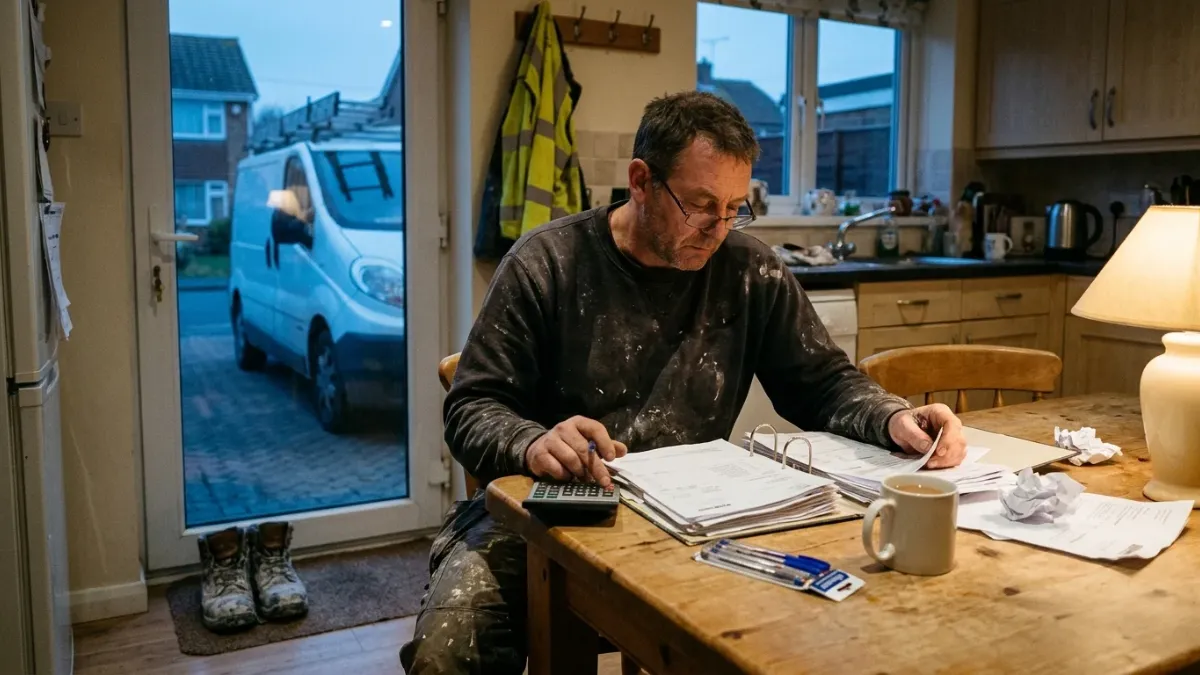
Late payment interest in the UK: charge 8% above Bank Rate plus £40, £70 or £100 per invoice under the 1998 Act. Worked example, rates by date and a letter template you can copy.

The VAT threshold in 2026 is £90,000 and the deregistration threshold is £88,000. See how the rolling 12-month and 30-day tests work, what late registration costs and how to cancel.
Learn how to write an invoice as a UK sole trader: what every invoice must include, when you need to add VAT, and a worked invoice sample you can use as your own template.