
Sole trader Self Assessment works like this: if your self-employed takings are more than £1,000 in a tax year (turnover, before expenses), you register with HMRC by 5 October after that tax year ends, file online by 31 January and pay by the same date, with payments on account towards the next bill on 31 January and 31 July. For 2026/27 you pay Income Tax on your profit plus Class 4 National Insurance at 6% between £12,570 and £50,270 and 2% above. Most sole traders no longer pay Class 2.
This winter two tax years overlap: you file 2025/26 by 31 January 2027 while earning 2026/27, and the Budget of 28 October 2026 has announced a £3,000 trading allowance from April 2027. Below are the rules, the first-year cash trap with real numbers, and the checklist we use before pressing submit.
Who has to register for Self Assessment as a sole trader
The test is the trading allowance. If your gross trading income in a tax year, everything you invoiced or took before costs, is over £1,000, you must tell HMRC and file. A cleaner who takes £1,400 from three Saturday clients is over the line even if her products and bus fares came to £700.
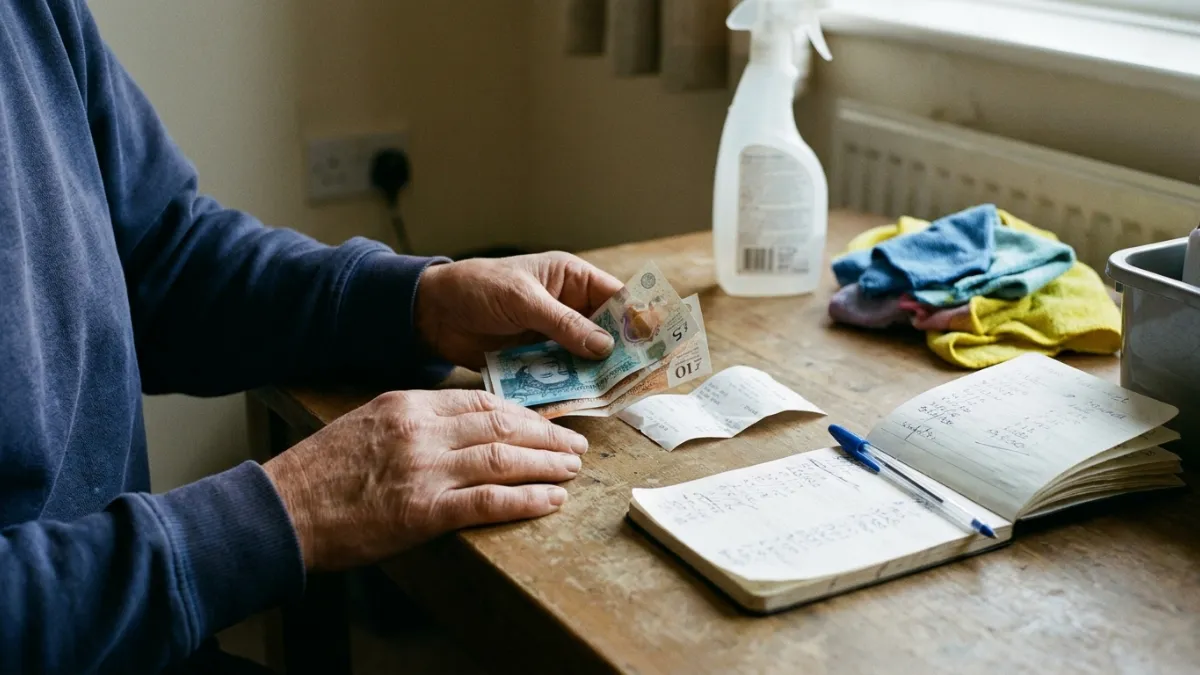
The £1,000 covers all your trades together. A PAYE salary doesn’t count towards it, so an employed electrician doing £3,000 of evening jobs has to register for those. Income from your own employer, a partnership you’re in or a company you or a relative control doesn’t get the allowance at all.
Over £1,000, you still choose between deducting your real expenses and deducting a flat £1,000. The flat amount wins when costs are small: a dog walker with £2,600 of takings and £300 of costs is taxed on £1,600 instead of £2,300. It can’t create a loss, and you can’t mix it with expense claims.
Registering below the line can still make sense: to record a first-year loss, to pay voluntary Class 2 for your State Pension, or to prove income for Tax-Free Childcare or a mortgage lender. CIS subcontractors only get the contractor’s 20% back through the return, as our guide to CIS deductions and how to claim them back explains.
As for the £3,000: the Budget of 28 October 2026 plans to raise both the allowance and the reporting threshold to £3,000 from 6 April 2027, through the Finance Bill 2026-27. It isn’t law yet and it doesn’t reach back: someone who takes £2,000 in 2026/27 still registers by 5 October 2027.
How to register for Self Assessment as a sole trader
It is one online form, but the start date you give matters: it fixes which tax year your first return covers.
- Sign in to your HMRC online account, or create one, with your National Insurance number to hand.
- Use Register for Self Assessment, choose self-employed and give your type of work, start date and business address.
- Wait for your Unique Taxpayer Reference (UTR): HMRC usually posts it around 15 days later, longer if you live overseas. It then also shows in your personal tax account and the HMRC app.
- Check Self Assessment is listed as a service in your account so you can file online.
A joiner who started on 10 May 2026 must register by 5 October 2027 and file by 31 January 2028. We’d register in the first month anyway: a main contractor wants the UTR before paying him under CIS.
Miss 5 October and you risk a failure-to-notify penalty, a percentage of the tax that went unpaid because HMRC didn’t know about you: 0% to 30% for a careless slip you correct yourself within 12 months, up to 70% or 100% if deliberate. It is measured on tax still unpaid at 31 January, so registering late but paying in full by then usually costs nothing.
Self Assessment deadlines for 2025/26 and 2026/27
Every deadline ends at 11:59pm.
| Date | What’s due |
|---|---|
| 5 October 2026 | Register if you started trading in 2025/26 |
| 31 October 2026 | Paper return for 2025/26 must reach HMRC |
| 30 December 2026 | Online 2025/26 return if you owe under £3,000 and want it collected through your PAYE tax code |
| 31 January 2027 | Online 2025/26 return, 2025/26 balancing payment, first payment on account for 2026/27 |
| 31 July 2027 | Second payment on account for 2026/27 |
| 5 October 2027 | Register if you started trading in 2026/27 |
| 31 October 2027 | Paper return for 2026/27 |
| 31 January 2028 | Online 2026/27 return, 2026/27 balancing payment, first payment on account for 2027/28 |
Register after 5 October and HMRC gives you three months from the date on its letter to file, but the tax is still due on 31 January, so interest can start before your return is even late. We’d always file online, and early: filing in spring doesn’t make you pay sooner, it just tells you the figure while there’s time to save.
Payments on account and your first tax bill
Payments on account are two advance instalments towards next year’s bill, each half of last year’s Income Tax and Class 4, due 31 January and 31 July. You skip them if last year’s bill was under £1,000 or more than 80% of your tax was collected at source, through PAYE for example. The rest is the balancing payment the following 31 January, which also picks up student loan repayments and Capital Gains Tax.
The trap is year one, when a full year’s tax and half the next land on the same day. Take Dan, a Leeds plasterer self-employed since 1 June 2026:
| Dan, 2026/27 | Amount |
|---|---|
| Turnover received to 5 April 2027 | £38,000 |
| Materials and consumables | −£4,800 |
| Van: 6,000 business miles at 55p | −£3,300 |
| Insurance and business share of phone | −£900 |
| Accountant’s fee | −£600 |
| Taxable profit | £28,400 |
| Income Tax: (£28,400 − £12,570) × 20% | £3,166.00 |
| Class 4: (£28,400 − £12,570) × 6% | £949.80 |
| Class 2 (profit above £7,105, treated as paid) | £0 |
| Bill for 2026/27 | £4,115.80 |
| Plus first payment on account for 2027/28 | £2,057.90 |
| To pay by 31 January 2028 | £6,173.70 |
| Second payment on account, 31 July 2028 | £2,057.90 |
His tax is about 14.5% of profit, but the January cash call is nearer 22%. For the van figure, see our guide to the self-employed mileage allowance and its 55p rate.
What we tell every new starter: open a separate savings account and move 25% of each job’s profit into it the day the client pays. It covers the first-year double hit, and from year two it pays the payments on account without a January scramble.
If profits fall, reduce your payments on account online or on form SA303, but cut too far and HMRC charges interest on the shortfall. Further out, the Budget plans to make everyone on payments on account pay more often during the year from April 2029, with automated payments and an option for eligible taxpayers to pay through PAYE. Nothing about it is legislated yet.
Basis-period reform: profits now follow the tax year
Since 2024/25 you are taxed on the profit of the tax year itself, not on the accounts ending in it. A year end from 31 March to 4 April counts as matching, which is why most sole traders we see now use 31 March.
Keep another date and you apportion two sets of accounts. A roofer with a 31 December year end is taxed in 2026/27 on 270/365 of his December 2026 profit (£36,500) plus 95/365 of his December 2027 profit (£40,150): £27,000 plus £10,450, so £37,450. The 2027 accounts won’t be ready by 31 January 2028, so he files an estimate and amends later. Moving to 31 March is usually the cleaner answer.
Transition profits: the last two slices
The catch-up in 2023/24 left many businesses with a transition profit. After overlap relief it is spread over five tax years to 2027/28, 20% a year by default, so 2026/27 carries the fourth slice. It goes in box 73.3 of the full pages. If you haven’t brought any forward, that slice is half of what was still untaxed at the start of the year; HMRC’s 2025/26 notes expressed last year’s slice the same way, as 33.3% of the remainder.
A salon owner with a 30 April year end and a £15,000 transition profit is taxed on £3,000 a year. If she stops trading in December 2026, the untaxed £6,000 falls into 2026/27 in one go. You can elect to bring slices forward, say in a quiet year, until the first anniversary of that year’s filing deadline. Near £100,000 of income, have your accountant run the numbers first.
SA103S or SA103F: which self-employment pages you need
The short pages (SA103S) are for turnover under £90,000, the same figure as the VAT registration threshold. Otherwise you need the full pages (SA103F):
| Your situation | Short (SA103S) | Full (SA103F) |
|---|---|---|
| One simple business, turnover under £90,000, year end 31 March or 5 April | Yes | Not needed |
| Turnover of £90,000 or more | No | Yes |
| Accounts ending before 31 March or after 5 April | No | Yes |
| Transition profit still being spread | No | Yes |
| Adjustment income from changing accounting basis | No | Yes |
| Profits needing a Class 4 adjustment | No | Yes |
Most tradespeople fit the first row, and online the service shows the matching pages from your answers. One box trips people up on both: the cash basis has been the default since 2024/25, so only tick traditional accounting if you really use it.
Class 4 and Class 2 National Insurance in 2026/27
Class 4 sits in the same calculation as Income Tax and in your payments on account. It is UK-wide: a Scottish joiner pays Scottish Income Tax rates but the same Class 4. The figures for the return you file this winter, the current year and the next one as announced in the Budget:
| National Insurance | 2025/26 | 2026/27 | 2027/28 (announced) |
|---|---|---|---|
| Class 4 on profits £12,570 to £50,270 | 6% | 6% | 6% |
| Class 4 on profits above £50,270 | 2% | 2% | 2% |
| Class 2 Small Profits Threshold | £6,845 | £7,105 | £7,355 |
| Voluntary Class 2 | £3.50 a week | £3.65 a week | £3.80 a week |
| Voluntary Class 3 | £17.75 a week | £18.40 a week | £19.05 a week |
Class 2 stopped being compulsory on 6 April 2024. At or above the Small Profits Threshold your contributions are treated as paid and the year counts for your State Pension at no cost. Below it you can pay voluntary Class 2 through the return, £189.80 for a full year, far cheaper than Class 3, and we’d usually do it for a part-time first year.
Since 6 April 2026 voluntary Class 2 is no longer available for periods abroad, and if you were over State Pension age at the start of the tax year you pay no Class 4. The 2027/28 column keeps the Class 4 limits frozen at £12,570 and £50,270; the new Class 2 and Class 3 rates still need their regulations.
Allowable expenses: what a sole trader can claim
An expense is allowable when it is wholly and exclusively for the business; for anything mixed you claim the business share. Under the cash basis you count money when it leaves your account, and most equipment, from hand tools to machinery, is simply an expense. Cars, land and buildings are the exceptions.
For a tradesperson that means materials, tools, van costs, insurance, the business share of phone and broadband, protective or branded workwear, accountancy fees and training that updates skills you already use. For the van you pick actual costs or the flat mileage rate, and the choice sticks to that vehicle. The flat rate is 55p a mile for the first 10,000 business miles and 25p after that, and the Budget plans 35p for those later miles from April 2027, which matters to anyone driving a long way to sites. Do your paperwork at home 25 hours or more a month and HMRC’s working from home flat rate is £10, £18 or £26 a month.
What we strip out most often: the whole phone bill, everyday clothes, client lunches, parking fines, the drive to a permanent workshop, and drawings, which are your money, not a cost. Snapping receipts as you go beats a January shoebox, and the version of Gremio Software for your trade reads a photographed receipt into an expense for you to check.
Penalties and interest if you file or pay late
For 2025/26 and 2026/27, unless you’re already in Making Tax Digital, the usual Self Assessment penalties apply. A late return costs £100 at once, even with nothing to pay; after three months £10 a day for up to 90 days; after six and again after twelve months, 5% of the tax due or £300, whichever is higher. Late payment adds 5% of the unpaid tax at 30 days, six months and twelve months.
Interest runs on everything paid late, payments on account included, at Bank Rate plus 4 points. HMRC’s interest table shows 7.75% since 9 January 2026, rising to 8% from 24 November 2026. If Dan files and pays his £6,173.70 on 15 March 2028, at 8% he owes the £100 penalty, 5% of his £4,115.80 balancing payment (£205.79; payments on account carry interest but no penalty) and about £59 of interest. Roughly £365 for six weeks. That is different from the interest you charge a slow customer, which our guide to late payment interest in the UK covers.
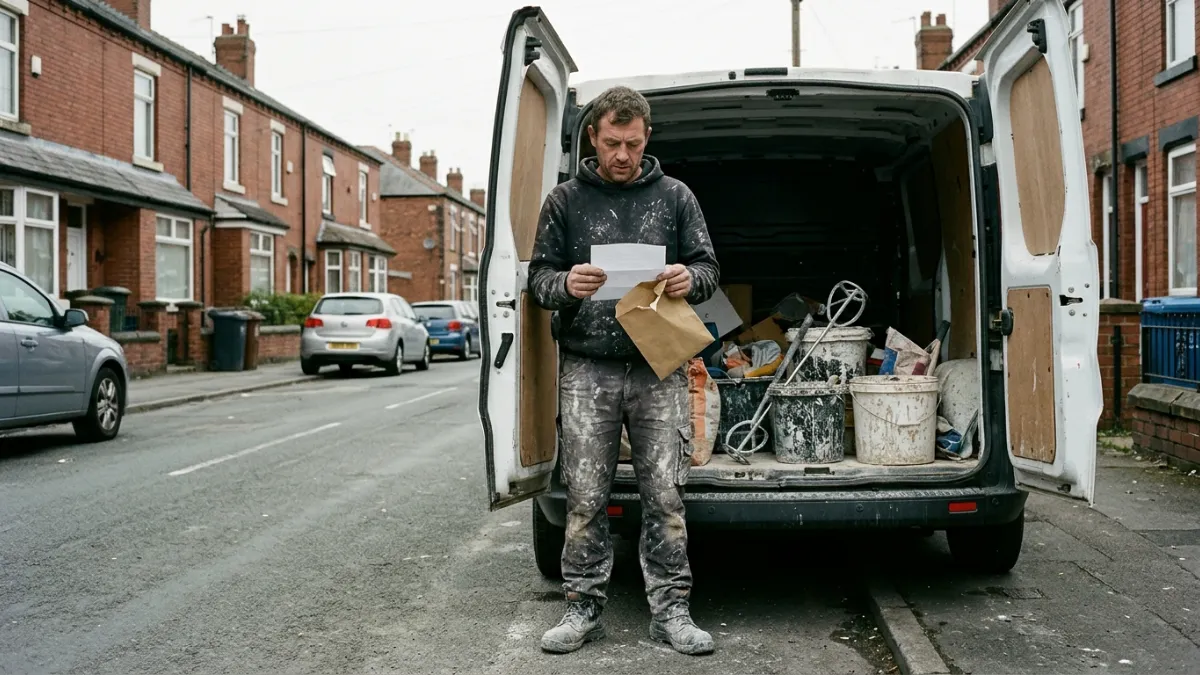
With a reasonable excuse, such as serious illness, appeal within 30 days. If you can’t pay in full, HMRC’s online payment plan covers debts up to £30,000; interest still runs, but later penalties aren’t charged while you keep to the plan.
All of this changes from the 2027/28 tax year. HMRC’s guidance on the new penalties says that from April 2027 they apply to everyone who files a personal Self Assessment return, so for most sole traders the first deadline under the new system is the 2027/28 return due on 31 January 2029. A late return earns a penalty point instead of the automatic £100. For a group of annual returns the points ceiling in the Finance Act 2021 (Schedule 24) is two, and the late return that takes you to it costs £200, as does each one after. In plain terms, two late returns within two years cost £200; a single point lapses after 24 months.
Late payment works differently too: nothing in the first 15 days, then a percentage of whatever is still unpaid at day 15 and again at day 30, plus a yearly rate charged daily after that. HMRC’s current table for 2027/28 shows 4%, 4% and 10%, and a softer start for your first year under the new rules.
The £3,000 trading allowance, the 2027/28 National Insurance figures, the 35p mileage rate and the 2029 payments-on-account change were announced in the Budget of 28 October 2026 and are not law yet: the allowance goes through the Finance Bill 2026-27, the National Insurance rates need regulations and the 2029 change still has to be designed. The 2025/26 and 2026/27 rules above are in force. Check transition profits, a change of year end or a big drop in profit with your accountant.
How Self Assessment sits alongside Making Tax Digital
Making Tax Digital for Income Tax doesn’t replace Self Assessment; it changes how you report. Once it applies to you, the records live in compatible software, quarterly updates go to HMRC through it and the year’s return is filed through it too. The 31 January deadline, payments on account, allowable expenses and Class 4 all work exactly as described above. Whether and when you are brought in depends on your income, and our guide to Making Tax Digital thresholds and dates covers that, along with the exemptions.
Sole trader Self Assessment filing checklist
- UTR and online account working, with Self Assessment listed.
- All takings for the year matched to bank and CIS statements.
- Expenses backed by receipts, private shares removed, trading allowance compared if costs are small.
- Vehicle method and mileage log for the year.
- Year end checked, any apportionment and transition slice on the full pages.
- Other income: P60, interest, rent, pension contributions, Gift Aid.
- Voluntary Class 2 if profits were under £7,105.
- Calculation checked and cash set aside for 31 January and 31 July.
- Submission reference saved; records kept five years after the 31 January deadline.
Frequently asked questions
Do I need to register for Self Assessment if I earn less than £1,000?
Not for that income, if your gross takings from all trades stay at £1,000 or less in the tax year and none come from a connected party. You may still register to record a loss, pay voluntary Class 2 or prove your income. The Budget plans to raise the figure to £3,000 from 6 April 2027, once the Finance Bill 2026-27 passes.
Can I do my own Self Assessment without an accountant?
Yes. Many sole traders with one business, a 31 March year end and turnover under £90,000 file online on the short pages themselves. We’d get help for transition profits, an odd year end, losses or a part-private vehicle.
How much tax does a sole trader pay on £30,000 profit?
In England, Wales or Northern Ireland for 2026/27, with no other income: £3,486 of Income Tax (20% of the £17,430 above the personal allowance) plus £1,045.80 of Class 4 (6% of the same slice), so £4,531.80, about 15% of profit. Each extra pound up to £50,270 costs 26p, which is why we suggest setting aside 25% to 30% of profit while you’re also building up payments on account.
I’m employed and self-employed. Do I still file a return?
Yes, if self-employed takings are over £1,000. If more than 80% of your tax is collected through PAYE you have no payments on account, and if you owe under £3,000 and file online by 30 December, HMRC can collect it through your tax code.
How long must I keep my records, and can I fix a mistake?
Keep records at least five years after the 31 January deadline, so 2025/26 records until 31 January 2032. You can amend an online return within 12 months of that deadline; if the tax goes up, pay quickly, because interest runs from the original date.
Sources
Rules checked on 8 November 2026, including the Budget of 28 October 2026. Check your own position with your accountant.
Expenses and invoices ready for your tax return
Photograph a receipt and the AI assistant fills in the expense for you to check, turn a signed quote into an invoice in one click, and give your accountant read-only access to export income and expenses to Excel or CSV. €19.95/month · or €199.50/year with 2 months free · no tie-in.